Forbidden! A Countercultural History of Censorship

Bone Music, amongst many other things, is a a story about censorship. The forbidding of people listening to the music they want to. As such it exists in a history of cultural repression for cultural, economic, class, aesthetic, ideological and religious reasons that is as old as language itself.

Songs, singers, rhythms, genres.music all instruments and dancing were all forbidden to different degrees at different times - along of course with books, films, poetry, paintings, theatre and artists of all types - for often burr reasons. Did any of it really work?

I recently had the pleasure to interview human rights lawyer ERIC BERKOWITZ about his epic new book 'Dangerous Ideas: A History of Censorship from Ancient Times to Fake News.

You can listen here:

The book is a thrilling read, full of sometimes comical, often alarming and always thought-provoking human stories - from that of the ancient Chinese emperor who destroyed any works implying there had ever been a better era than his own, to the current Chinese leader's attempts to have Winnie the Pooh banned (after his and the bear's resemblance was pointed out). The UK and the US don’t fare too well either.

We discuss the situation around the x-ray culture, the fear of dances that might around the passions of young people and the hypocrisy of the Soviet elite when it came to songs.

Why have books, films, images words and ideas always been censored by those in power? Are there times when they should be? Does censorship ever work?

Eric digs deep into the touchiness of tyrants, into our current issues around blame, shame and cancel culture and why he thinks that almost nothing should be censored. We explore why countercultural ideas are so necessary for the culture and why they are only really dangerous when denied expression.

For more on Eric and the book www.ericberkowitz.com

For more on the Bureau of Lost Culture www.bureauoflostculture.com

How the Beatles Rocked the Kremlin

Cold War Spy meets The Fab Four in the USSR

The Beatles were one of the first (and few) British rock’n’Roll bands to appear on Bone records. Though I like their music, I am not a huge fan, so I’m fascinated by the gigantic global impact they had - on both the culture and the counterculture and on both sides of the Iron Curtain. It really is quite mysterious.

I recently interviewed the award winning filmmaker LESLIE WOODHEAD on the subject - specifically on the transformational effect the Fab Four had on young Russians in the 60s and 70s. I know from my own interviews with many of those who grew up on the 50s, 60s and even 70s how important they were. Actually, ‘Important’ doesn’t really cover it - some have claimed their effect to be more significant than all the cold war western cultural propaganda combined in helping to bring about perestroika

When Leslie was asked by Granada TV to film a new young music group in a club in Liverpool in 1962, he had no idea what he was in for - and neither had the rest of the world. He was witnessing the birth of a phenomenon. But by then he had already had some extraordinary experiences - serving a stint as a cold war spy, learning Russian on a remote Scottish pig farm and spending time eavesdropping on Soviet pilots from West Berlin.

These experiences continued to influence his life as a film maker, finally coalescing with his fascination with the Fab Four in the investigations that resulted in his terrific documentary ‘How the Beatles Rocked the Kremlin’.

You can listen to our interview below.

To hear more oral testimony and tales from the underground Click HERE or on the image for the BUREAU OF LOST CULTURE podcast

Soviet Soul Music? - The Yard Songs

Vladimir Vysotsky

Vladimir Vysotsky

Of the various types of music that appeared on x-ray, the ones that have most been written about in the west are jazz and rock’n’ roll. That is natural because it fits wth a western view of cold war culture but it is only partly true. I have written HERE about the Russian emigre songs (mostly forbidden) that were the most common recordings found on bone records.

But there was another type of music that was perhaps more important in terms of dissidence, even though it was less common on x-ray. This was the music in the ‘blatnaya’* style - a genre that originated inside the Soviet Union and was always deemed completely unacceptable for recording or distribution: the Odessa ditties, the urban romances, the criminal and gulag chanson - the ‘Yard’ songs.

These songs might have been forbidden from being recorded but they were sung live in the courtyards and communal places where ordinary people gathered out of sight of the authorities. They were not necessarily overtly protest songs as was understood in the west; they were prohibited just because they were about real-life in the USSR with lyrics about love, lust, violence, death, criminal culture, suffering. They revealed the dark underbelly of the utopian communist dream and that was of course off limits. Further, they often contained criminal slang, swearing or coarse jokes at the expense of the Soviet system and officials. Maxim Gorky, the social realist ideologue, had declared in the early 30s that any art form critical of the Soviet system should be banned. Often their tunes were old melodies whose life stretched back to the era before the revolution, tunes everybody knew and loved and were adopted with new lyrics as the years went by. Many are still known and loved in Russia. 

The continued existence of these songs was a kind of collective unspoken act of resistance. Singers could be punished (some were sent to gulags some exiled, others shot), songs could be forbidden (whole books listing forbidden songs were produced each year) but it did not mean they were forgotten. The songs lived on by being performed clandestinely in communal places where underground culture was passed from generation to generation. Sheet music of the most popular tunes was secretly produced, circulated and exported so that émigré singers could make recordings abroad and these be smuggled back in to be copied and distributed on x-ray.

Our friend the scholar Maxim Kravchinsky (see www.kravchinsky.com) is a world expert on this genre of music - and on Russian emigre songs. He introduced me to Eleonara Filina, a journalist and singer of yard songs, who explained how the soul of Russians oppressed under the Soviet system lived on in part by the singing of yard songs:

“Why the yard? Because Soviet people had a tradition of gathering after work or on weekends in their courtyards. That was in our nature, thanks to the fact that there were a lot of communal flats perhaps. We lived like this, crowded, there were so many of us. Apartments were small. The Soviet people were very sociable. They would go out into the yard of their apartment buildings and sit and sing these songs together because TV was not enough, radio was not enough. They were sung wherever people gathered, in the yards, in the kitchens, in the pioneer camps, in the prisons

The thing is, the Soviet establishment was trying to show life as a candy wrapper - everybody's happy, everything's fine, there is no problem, we have a brilliant future. And these songs were about the realities of life, how people really lived. They were about betrayals of love, about suffering, about how people were sent to jail, you know. Everything was expressed in the songs. That’s why they were forbidden.

Moreover, during the years of repression, the intelligentsia were in prisons, along with criminals. They heard these songs and when they came out of prison, they sang them just as the criminals did in the yards. Their kids, the neighbours heard the songs, and they loved to learn them and sing them too.” After all, almost every family had at least one member in the camps

*‘Blatnaya’ does not seem to have any simple English translation but ‘Blatnoy’ initially meant a criminal who holds authority amongst other criminals in labour camps, colonies or prisons. It is a romanticised vision of criminal life and the word ‘Blat’ apparently has connotations of ‘blood’, ‘bone’ and ’bread’ - perhaps implying something essential, something visceral, something of ‘the soul’? I’d be eager to hear from Russian friends on how they understand this word.

—————-

Prisoners at the White Sea Canal Prison C1933  Photo: Oleg Klimov / Russian State National Library, St. Petersburg

Prisoners at the White Sea Canal Prison C1933 Photo: Oleg Klimov / Russian State National Library, St. Petersburg

Songs like Yury Nikulin’s "Postoi Parovoz” (Hold on, Steam Train), a criminal song of regret, became hugely popular through being sung in the yards.

Don't wait for me Mother
Don't expect me to be the nice boy I used to be...
A dangerous swamp has swallowed me up.
And my life is a constant gambl
e

One of the most famous criminal songs sung in the yards was ’Murka” which told the tale of a faithless female member of a criminal gang to a tune originally composed by Oscar Strok. It was performed in many versions by underground and emigre singers and even by official singers like Leonid Utyesov.

Underground singers like Arkady Severgny became hugely popular without any official acknowledgement by recording and performing yard songs secretly. Vladimir Vysotsky, probably the most famous actor and singer of the 60s, started out as a yard singer before he began composing his own songs, which themselves were a stylised version of the yard songs. Vysotsky’s music was officially forbidden for many years, but even government apparatchniks listened to it secretly.

How?

On x-ray discs and magnetic tape bootlegs.

I'd love to Turn you On, I mean Off

It’s easy to assume that music censorship was all in the province of the baddies on the other side of the iron curtain, but it turns out we were at it too (banning music for all sorts of spurious reasons). As I wrote HERE, The Beatles were the target of censorship in the West more than once - and even quite late on in the cold war years.

On May 23rd 1967, Frank Gilliard, Director of Broadcasting at the BBC wrote an embarrassed letter to Sir Joseph Lockwood, the Chairman of EMI explaining why ‘Day in the Life’ would not be played - a ban that wasn’t lifted until March 13, 1972.

Click on the image below to read the full details.

(Thanks to Adam Berry for passing this on)

ARTEMYI TROITSKY told me a funny story in this regard when I interviewed him on the subject of Soviet Youth Culture. When he was running his ‘discos’ at the university Moscow in the early 70s, he was forced to provide the authorities with a translation and explanation of the lyrics of each western song he played. He gave up when it came to ‘Day in the Life’ - for probably obvious reasons.. Listen HERE

beatlesky.jpg

THE BEATLES. ENCYCLOPEDIC REFERENCE by Nikolay Kozlov1996.

A Soviet Beatles flexi disc (courtesy of Victor Dubiler)

A Soviet Beatles flexi disc (courtesy of Andrey Lukanin)

The 'X-Change'

Alexey with Wills Conover. host of of Voice of America’s  Jazz Hour Moscow 1969

Alexey with Wills Conover. host of of Voice of America’s Jazz Hour Moscow 1969

I spent a little time with Alexey Kozlov the legendary sax player at his club in Moscow last year. Alexey’s life story is amazing: growing up in the worst years of the Stalin period, learning to play on a borrowed instrument and becoming one of the best known Russian jazz musicians.

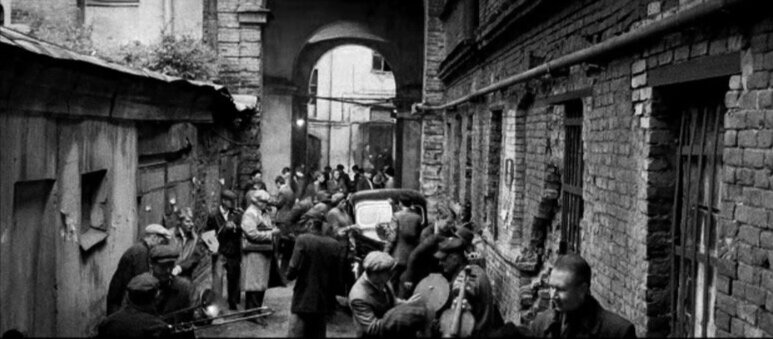
One of the fascinating things he tells of was the Exchange’, sometimes nicknamed affectionately, and with a heavy dose of irony, 'The Stock Exchange’. This was a place in Moscow where music lovers and musicians of various types, especially jazzers, would gather. Jazz of course was banned.

After the war, the Exchange was at the corner of Neglinnaya and Pushechnaya Streets and, from the end of the 50s, was located in an alley by the arches between Marx Avenue and October 25th Street. Promoters needing musicians for an event might come there to hire them so The Exchange functioned as a kind of unofficial agency plus a discrete meeting place for jazz players - many of whom had been forced to give up or play in other styles. Sheet music and instruments could be bought, sold, borrowed and swapped along with x-ray bootlegs of the latest American and British hot tunes.

The Exchange as it appears in the film ‘Stilyagi’

The Exchange as it appears in the film ‘Stilyagi’

Alexey first started to go to the Exchange in 1956 hoping to learn new piano techniques. He was particularly interested in the left hand technique used to play stride and boogie woogie - The Exchange also operated as a kind of underground jazz school where players could learn from each other and swap tips on style, method and harmony.

He was keen to be counted amongst their company. He enjoyed playing rudimentary jazz piano and even tried to learn double bass but his real hero and inspiration was the American saxophone player Gerry Mulligan.  At that time, the sax was banned as an anti-Soviet symbol of American culture beloved only of hooligans - there was the infamous ludicrous claim “'It's just one step from a saxophone to a knife.” Satirical cartoons in magazines like Krokodil would portray ‘Capitalists’ as devils with sticks that resembled saxophones in shape. 

But one day Alexey found a pre-war German alto sax hidden under the stage at the youth music club he attended (he told me it had a swastika on it, so presumably had been looted during the war). In an unusually liberal act, the director of the club allowed him to borrow it. Over the next few months he learned to play - getting tips from guys at the exchange, buying reeds from an old man who made them at home and playing along with tunes on smuggled jazz sides and bone records (Igor Brill the pianist also said that bone records acted as a means of learning for him).

And so, as the 60s passed and jazz gradually became more tolerated in the Soviet Union, Russia gained one of its most influential players.

Alexey Kozlov (baritone saxophone) with Vadim Sakun (piano) Nikolay Gromin (guitar), Andrey Tovmosyan (trumpet) at the International Festival "Jazz-Jamboree" Warsaw 1962

A Short History of the Soviet Underground

attachment.jpg

The first time the culture of x-ray records and bone music was written about in the west was in the 1989 book ’Back in the USSR: The True Story of Russian Rock’. The author of that book was veteran Russian broadcaster, cultural commentator and journalist Artemyi Troitsky. Art appeared in our first book: The Strange Story of Soviet music on the Bone; and gave us a lot of help. So it was a great pleasure to have him join me for an episode of our Bureau of Lost Culture radio show.

We hear some entertaining, comical, tragic, moving and frankly strange stories including tales of the ‘Stilyagi' Soviet Hipsters, the first disco in Moscow, Che Guevara and Lenin as a mushroom. We ask if counterculture possible in the oppressive, repressive circumstances of the Soviet Union? And we hear how rock music evolved in secret before breaking into the light as perestroika transformed Soviet society.

For more on Art
For more on the Bureau of Lost Culture

The Strange Art of Lathe Recording

The machines used to make x-ray records are called ‘lathes’. In the latest edition of our Bureau of Lost Culture Show on Soho radio, we dig deep into the strange art of lathe recording with US vinyl artist Mike Dixon and Jim MGuinn professional lathe cutter, both experts in the field of short run and handmade records.

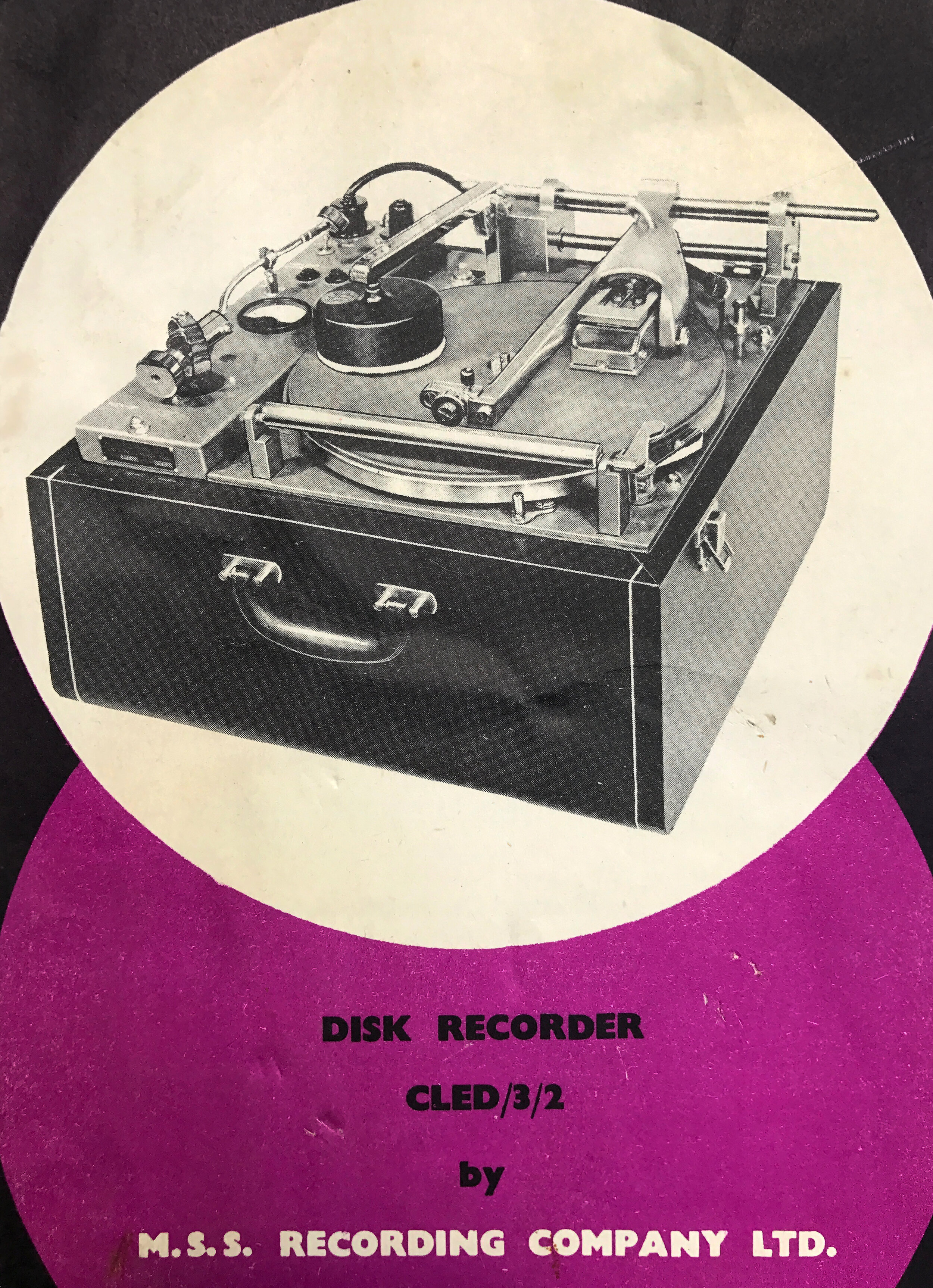
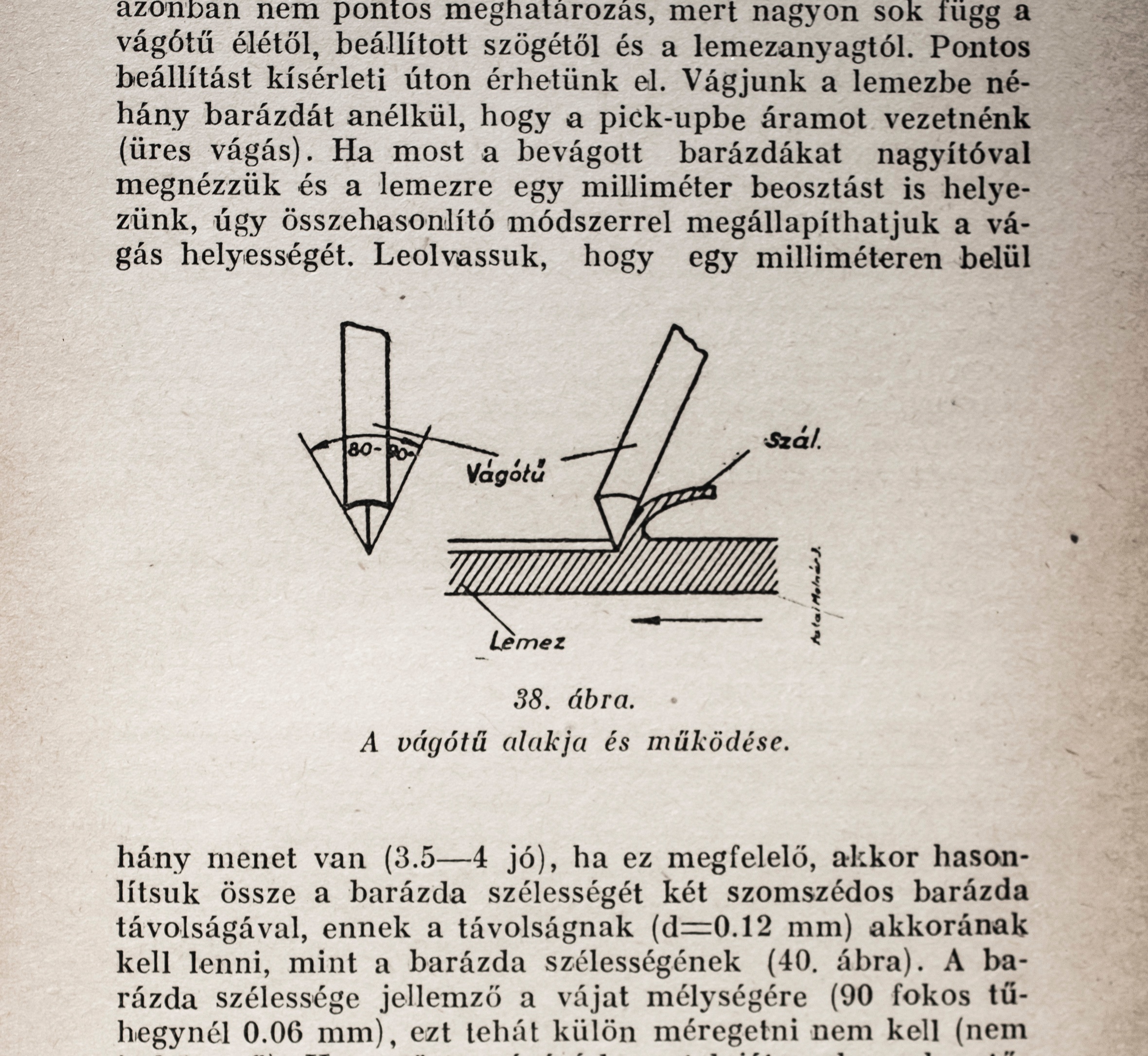
A lathe operates as a kind of record player in reverse. With a lathe, instead of a needle there is a cutting head that vibrates and ‘writes’ a groove into a spinning blank disc when an audio signal is fed into it.  The resulting disc can be played back just like a conventional record. 

The process is quite different than the pressing method by which conventional records are made. Pressing involves the creation of a master matrix that is stamped into soft hot vinyl. Pressing is a mass production method – many discs can be made quickly and all are exactly the same. Recording with a lathe is generally done in real time, one disc at a time, and each record is slightly different than all the others.

The lathe we use to cut x-ray records live is a 1957 MSS - MSS made lathes for the BBC to make recordings in the field and for transcription purposes. The Soviet bootleggers built their own lathes based on ones that had been smuggled into the USSR or brought back as war trophies after the second world war.

We have a homemade Soviet lathe built by a bootlegger in the early 1960s as part of then music exhibition.

In the program, we also hear about chocolate records, ice records, records made from road signs and escalator hand rails, cutting records live for an American sports team, Nazi transcription machines, wire recorders and much more esoterica from the arcane byways of audio history...

Find out more about Mike HERE

IMG_9907.jpg
IMG_9922.jpg

This is What Its About

Check out the video report on Euro News for a great little summary of our live event. this was recorded at The House of European History in Brussels this January (just before Brexit…).

Recording an Office Fan to X-Ray

Earlier this year, we curated an exhibition with Sony Music in Tokyo. As part of the show we held various live events. At the studios of Dommune TV, the crazy and quite wonderful Open Reel Ensemble joined us for a live broadcast.

Here they are performing with an office fan. Yes, you read that right, with an office fan - which we recorded onto x-ray film and played back.

Courtesy of Sony Music and Dommune

The Invisible War of the Cold War Airwaves

The music cut onto x-ray in the Soviet Union came from three sources:

EXISTING GRAMOPHONE RECORDS: these might be discs by artists that were available in less repressive times before the war; those that were smuggled in and sold on the black market or ones that were borrowed or bought from people such as the privileged so-called ‘golden youth’, diplomats, foreign workers etc. who had access to Western goods or travelled abroad. Some were even copied from previously made x-ray records.

LIVE PERFORMANCES: an underground singer (and occasionally a well-known singer) might be secretly recorded to tape in a studio, or even direct to x-ray, and the recordings re-copied.

Willis Conover

Willis Conover

SHORTWAVE RADIO: the West was actively broadcasting into the Soviet Union. As well as speech programs, the BBC, Radio Free Europe and especially Voice of America, produced music shows which were directly aimed at Soviet youth. Willis Conovers’ Jazz Hour was probably the most famous. Conover broadcast for over forty years from 1955 on a shortwave frequency to a worldwide audience of millions with many listeners in the Soviet Union where his voice became much more recognisable than in his home in the USA.

Of course, the Soviet Authorities did not approve. Whilst they may have been more concerned with stopping spoken word and political speech, jazzy music programs were unwelcome too. Huge efforts and vast amounts of money were spent attempting to jam foreign signals by the method of broadcasting various electronic noises continuously on the same wavelength (a technique still used by North Korea).

But they couldn’t stop the signal completely - or continuously. Reception would vary according to the weather and the US responded to the jammers by building ever more powerful transmitters and using shifting wavelengths. A foreign signal would be much stronger in places such as Leningrad that were far from Moscow (where the main jamming equipment was built) and nearer to Western Europe.

Michael Farafanov, a Soviet era x-ray bootlegger, told us that he would he would travel around the country and even scale hills to find the best places to install his aerial and adapted radio receiver (official radios had limits to the frequencies they could receive).

In the radio show below, an episode of our Bureau of Lost Culture series on Soho Radio, we meet with Russian journalist, broadcaster and writer Vladimir Raevsky to hear the fascinating story of the Soviet Radio Jammers. Vladimir tells of the extraordinary lengths people went to to listen to the music they loved and of the gigantic amount of money spent by both sides in this invisible war of the airwaves.

We also hear from BBC Russian Arts correspondent Alex Kan about the brave / foolhardy so-called Radio Hooligans - the technically savvy young Soviets who dared to risk punishment by setting up their own little pirate radio stations to broadcast themselves and the music they liked using bootlegged and adapted equipment.

And finally we hear the strange story of the signal emitted by The Duga a gigantic mysterious installation near the Chernobyl nuclear site.

At times rather hysterically claimed to be a mind altering sonic ray intended as a cold war weapon, the Duga seems to have been a botched attempt at a very long range early warning radar system to detect nuclear missiles. The installation stills stands, now abandoned, as a mysterious, and somewhat terrifying, testament to cold war technology.

The strange knocking sound it made would disrupt shortwave radio programs across Europe - and became christened .. ‘The Russian Woodpecker’.

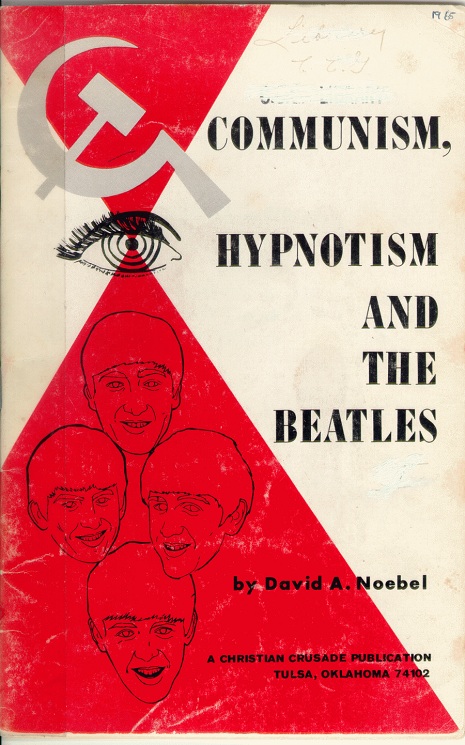
Communism, Hypnotism and The Beatles

51-kxpQ4dUL.jpg

So You Say You Want a Revolution?

It’s easy to be comically outraged by the abusive, and at times menacing, attitude of the Soviet Authorities toward the young Russian hipsters known as Stilyagi who aped American fashions. They were really just fun-seeking kids, not dissidents, but they were regularly pilloried in the press, as was the Western Jazz and Rock and Roll they loved to listen to on x-ray records. But it’s worth remembering that in the West too there were similar disapproving attitudes towards teenagers, ‘hooligans’, ‘delinquents’, young ‘punks’ etc.. Rock ‘n’ Roll was described as ‘the devil’s music” using much the same pseudo- moral reasons given in the atheist Soviet Union: that it had ‘sexual rhythms" and "suggestive lyrics", that it would tempt the young and innocent off the path of virtue and into acts of depravity or social disobedience.  Elvis Presley, whose music drew a huge amount of ire from conservative quarters, and who was subject to various prohibitions at times, is STILL being censored in the US it seems.

51aHEEd1ftL._SX331_BO1%2C204%2C203%2C200_.jpg

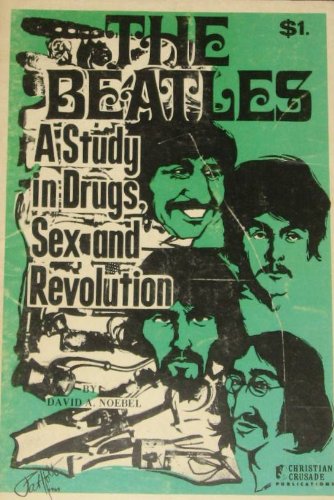
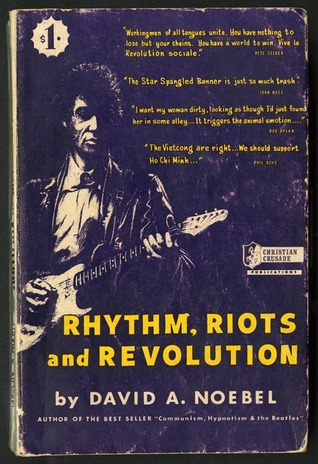
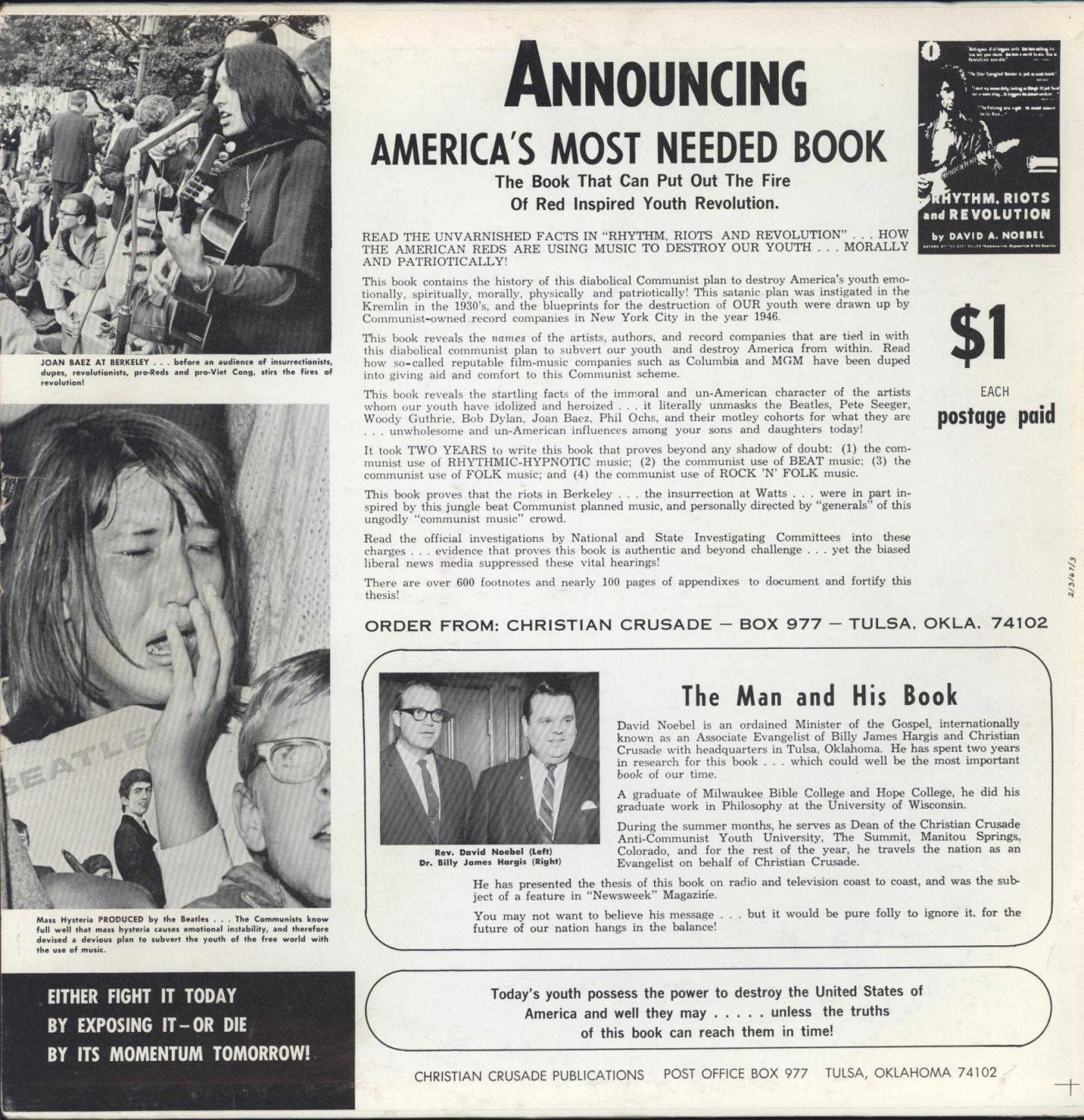
This moral disapprobation of young, cool music collided with the rampant anti-communist rhetoric of the American fundamentalist right with almost comical effect from the 1950s to 1970s. Firebrand Christian writer David Noebel* (who is still active) published various books and leaflets warning against the infiltration of the Reds into the US. He claimed the Communists were using pop music to brainwash young people. Obvious left-wing folkies such as Joan Baez and Pete Seeger first attracted his righteous indignation but he was convinced that Bob Dylan, The Beatles and particularly John Lennon, were also intent on corrupting American youth - and were being used deliberately by the Soviets to do so.

He may perhaps have assumed that the fact the Soviet authorities prohibited these and similar artists (such as the Russian ‘bard’ singers), was not evidence that their music was actually anti-totalitarian, but proof of its fundamental moral degeneracy - and therefore of its efficacy in attacking the West. What he felt about the fact that the US and the British, were actively broadcasting such corrupting music into the Soviet Union, and aiming it specifically at young people, is difficult to know.

What would he have made of our recently deceased friend Kolya Vasin, the Russian ‘Beatles Guy’? As a youth, Kolya had all the outward signs of a 1960s rebellious teenager: the long hair, the hippy clothes, the acoustic guitar and the afternoons spent drinking wine in the park. He suffered as a result - he was ridiculed and even assaulted by members of the Komsomol youth police at various times.

Early in the 1960s he had bought an x-ray record which had turned out to contain a Beatles song. It changed his life profoundly, in fact it made him pro - US and anti-communist. When I asked him what The Beatles music meant to him, he simply said one word: ‘Freedom’.

It seems fundamentalist thinking, whether it be on the left or the right, always seems to feel threatened by youth and pop culture, in fact by …freedom.

*Some of David’s books (and a vinyl LP) are above and below.

The anti rock ‘ n’ roll propaganda could get quite nasty. As in the Soviet Union, it was sometimes underpinned with a vicious racist narrative - with black culture in the US seen as responsible, gypsy and jewish influences blamed in the USSR.

Watch this selection for more.

The Sound of the Modern X-Ray Record

At X-Ray Audio live events we cut new x-ray records from live performances. We have worked with various musicians playing in different styles including the thereminist Lydia Kavina, Marc Almond, Barry Adamson, Marcella Puppini, Alexander Hacke (Einstürzende Neubauten), Thurston Moore (Sonic Youth), Veronika Harcsa, Nadia (Race for Space) and Mobius.

TAMA 2018-6753.jpg

To cut the records, we use a 1950s MSS recording lathe (see below), originally used by BBC journalists in the field. This was the kind of machine copied by the Soviet Bootleggers to make their records.. Modern X-Rays are much more difficult to cut onto than the cellulose nitrate based radiography film used in the 1930s - 1960s. They made of a nylon based plastic and are much harder.

The original bootleggers got some surprisingly good sonic results cutting on very thin film with sapphire needles using homemade machines like the one here to the right. They also often had great taste and, sometimes (and somehow) access to cool records. Mikhail Farafanov, a bootlegger we interviewed last year, took pride in introducing his customers to the new sounds he discovered and loved - as well as selling them the popular tunes they asked for. He also took pride producing the best audio quality he could, whereas some of his rivals were happy to pass off very poor sounding records on gullible people who were just keen together their hands on any forbidden music at all.. We came across various stories of unfortunate punters buying a record and discovering it was not what they had asked for or was virtually unlistenable when they got it home.

Here is an example of a great sounding late 1950s /early 1960s bootleg recording of a rare rock ‘n’ roll record ‘Big Guitar’ by an unknown artist (if you know who it is, please let us know). It is still sounding hot after all these years I think you will agree.

A recording lathe is a little like a gramophone / record player in reverse. Instead of a needle that ‘reads’ the groove of a record through vibrations which are transformed and amplified into sound, a vibrating cutting head scratches a groove into a blank spinning surface when an audio signal is fed into it. Particularly when it comes to using x-ray film as the media rather then commercially available acetates, the process is a bit like cooking and somewhat unpredictable even if you have the recipe. There are lots of variables that make a difference: the age of the cutting needle, the angle of the cut, the temperature, the surface quality, the type of music, the skill of the recordist, the quality of the original source etc.. Each record is cut in real time, so each sounds different than all the others. We learned the process by actually doing it and from details we learned from an 1930s technical manual we found in Budapest.

Below are a selection of digitised clips from records made with some the artists we have worked with.

Barry Adamson at The British Library

Barry Adamson at The British Library

new+discs+and+Makai+book+july+2017-1806.jpg
IMG_9907.jpg
xray-lathe.jpg

Audio hi fi quality obviously isn’t the point and they are a tough listen at times but they do have a rather wonderful ghostly quality which we have come to love. All the musicians have worked with have been delighted - even if not with the quality, then with the magic of making a record so directly (and a strange beautiful one at that) without the intervening layers of management, record company, pressing plant and even sound engineer..


Death of a Bone Buyer

A couple of months ago, we learned of the death of KOLYA VASIN.  Kolya was famous in Russia as 'The Beatles Guy' or as he liked to describe himself: 'The Number One Beatles Fan'.

We met him several times - usually in 'The Temple of Love' - a crazy, crowded couple of rooms in St Petersburg which he had set up as a shrine to the Fab Four - and specifically to John Lennon who he regarded almost as a deity. We interviewed him for our book and documentary and last saw him at the X-Ray Audio exhibition in St Petersburg a year ago.

When Kolya was young in Leningrad in the 1960s he was introduced to Western Rock and Roll - on x-ray records. He immediately became addicted and spent all his money (including cash his mother gave him for school lunch) on buying them. One day he brought home a disc and played it. It was The Beatles and it is no exaggeration to say that it completely changed his life. From that time forward he devoted himself to their music.  

New Hollandia-8942.jpg

He told us what it was like to be a young music lover in the oppressive years of the Soviet Union and about the culture of getting the music he loved from dealers on the street. A lot of the information about the punk street culture of the x-ray dealers came from Kolya. Essentially buying x-ray bootlegs then was like buying illegal soft drugs now - and it ran the same sort of risks and punishments.

In some ways Kolya was crazy - or at least very eccentric - but he was a genuinely good person, a free spirit: he believed in love, freedom and the transformative power of rock 'n' roll.  He was living testament to the liberating power of music  - and it all began for him with x-ray records.  His death was tragic - it seems he finally gave up on his dream of having a permanent shrine to Lennon in St Petersburg for some reason and he then found no reason to go on living.

He ended his life by jumping from a building.

You can watch him in the video below unhappier times as he tells of his life as a youth in Soviet Leningrad and how he was affected by the discovery of music on X-Ray


RIP Kolya.

Kolya Vasin talks to us about his youth in Soviet Leningrad, how he met Rock'n' Roll and the love of his ilife (The Beatles) through X-Ray records. RIP

Totalitarian Jazz

Jazz is one of the Western styles which appear on Bone Records and of course was the most popular one amongst the youth group The Stilyagi but the complex story of Jazz in the Soviet Union cannot be easily summed up. The party line on it varied considerably through the decades from the relatively tolerant 1920s to the brutal era of the late 1940s. (The best book on the subject is probably S. Frederick Starr's  Red and Hot: The Fate of Jazz in the Soviet Union 1917-1991 ).

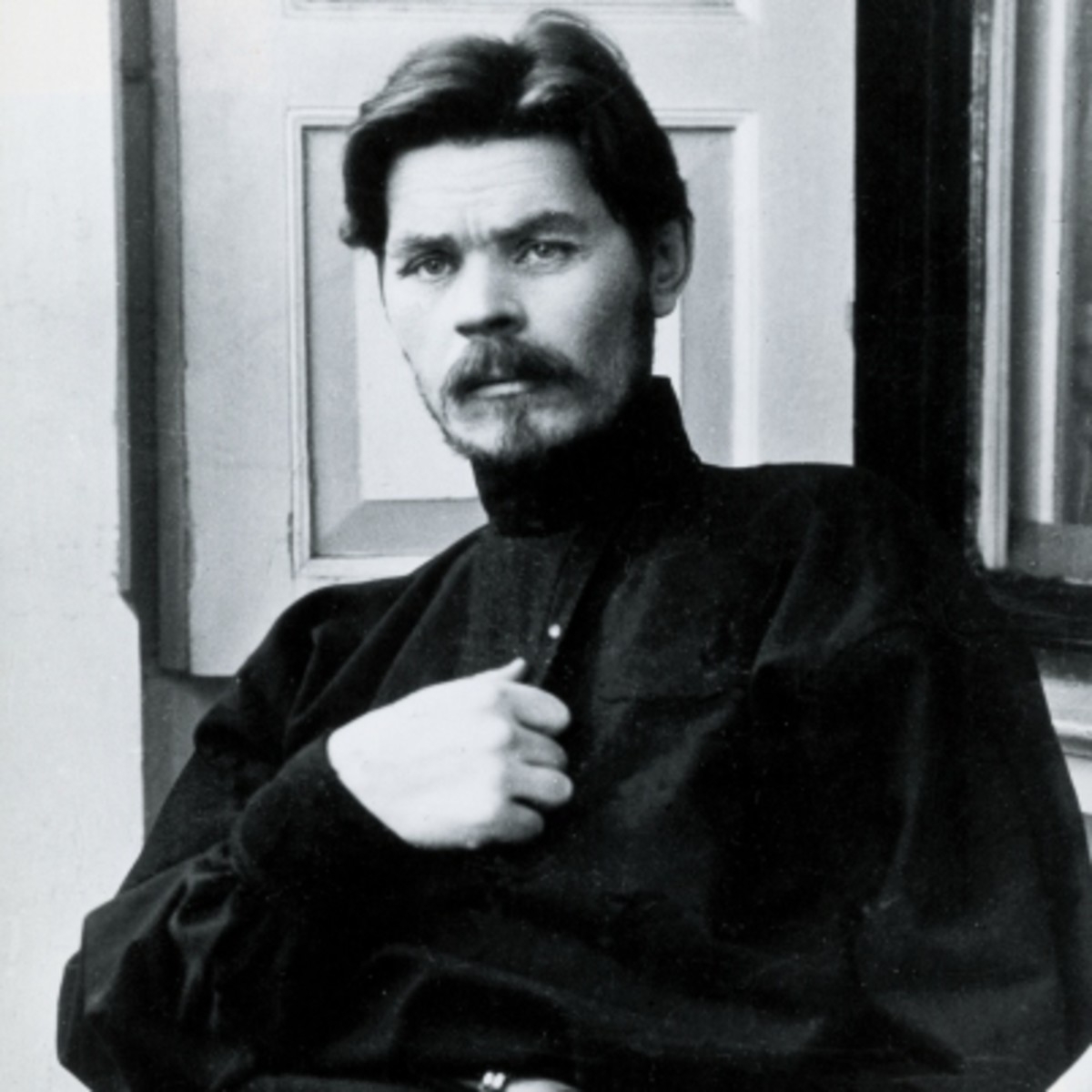
Attitudes hardened and became much more punitive after writer and Socialist Realist ideologue Maxim Gorky  published his piece "The Music of the Gross" in 1928.


Maxim Gorky

Maxim Gorky

"There are rumblings, wails and howls like the smarting of a metal pig, the shriek of a donkey, or the amorous croaking of a monstrous frog. Bestial cries are heard, neighing horses, wild screaming, hissing, rattling, wailing, moaning, cackling. The insulting chaos of insanity pulses to a throbbing rhythm. Listening to this screaming music for a few minutes , one involuntarily imagines an orchestra of sexual maniacs led by a man-stallion beating time with an enormous phallus. The monstrous bass belches our English words; a wild horn wails piercingly, calling to mind the cries of a raving camel; a drum pounds monotonously; a nasty little pipe tears at ones ears; a saxophone emits its quacking nasal sound. Fleshy hips sway, and thousands of heavy feet tread and shuffle. The music of the degenerate ends finally with a deafening thud, as though a case of pottery had been flung down from the skies." 


In Gorky's  inflamed rhetoric, it is difficult to separate out any objection to the specific styles and sounds of jazz from a general prejudice against Western music or music which made young people want to dance or have sex rather than work.  Improvisation and complexity were of course frowned on as being 'formalistic' and judged as being incomprehensible to the common man or woman. 

But at different times, jazz was tolerated - particularly the more polite, light, cocktail styles - and of course there were some noted Soviet Jazz musicians or musicians who played in more swing styles such as Eddie Rosner**.  During the second world war, when the US , Britain and the Soviet Union were allies, it was even possible to watch American films with jazz soundtracks in Moscow and St Petersburg and to hear Western tunes on the radio, a brief period of detente which provoked the hunger for such music in a subsequent generation of young music lovers. But later there were again brutal repressions with musicians being pulled from stages and imprisoned. Rosner himself spent time in a Gulag was lucky to survive.

Strangely, it seems totalitarian regimes from all ends of the political spectrum have shared similar objections to jazz. According to Czech writer and dissident Josef Skvorecky, a tenor saxophone player living in Third Reich-occupied Czechoslovakia, the Nazis took a similar line to the Soviet ideologues.  In the introduction to his novel The Bass Saxophone, he recalls ten regulations issued by a certain Gauleiter, a Nazi official, to control the performance of the local dance orchestras during the Czech occupation:

Eddie Rosner

Eddie Rosner

  •  Pieces in foxtrot rhythm (so-called swing) are not to exceed 20% of the repertoires of light orchestras and dance bands;
  • In this so-called jazz type repertoire, preference is to be given to compositions in a major key and to lyrics expressing joy in life rather than Jewishly gloomy lyrics;
  •  As to tempo, preference is also to be given to brisk compositions over slow ones so-called blues); however, the pace must not exceed a certain degree of allegro, commensurate with the Aryan sense of discipline and moderation. On no account will Negroid excesses in tempo (so-called hot jazz) or in solo performances (so-called breaks) be tolerated;
  • So-called jazz compositions may contain at most 10% syncopation; the remainder must consist of a natural legato movement devoid of the hysterical rhythmic reverses characteristic of the barbarian races and conductive to dark instincts alien to the German people (so-called riffs);
  • Strictly prohibited is the use of instruments alien to the German spirit (so-called cowbells, flexatone, brushes, etc.) as well as all mutes which turn the noble sound of wind and brass instruments into a Jewish-Freemasonic yowl (so-called wa-wa, hat, etc.);
  • Also prohibited are so-called drum breaks longer than half a bar in four-quarter beat (except in stylized military marches);
  • The double bass must be played solely with the bow in so-called jazz compositions;
  • Plucking of the strings is prohibited, since it is damaging to the instrument and detrimental to Aryan musicality; if a so-called pizzicato effect is absolutely desirable for the character of the composition, strict care must be taken lest the string be allowed to patter on the sordine, which is henceforth forbidden;
  •  Musicians are likewise forbidden to make vocal improvisations (so-called scat);
  •  All light orchestras and dance bands are advised to restrict the use of saxophones of all keys and to substitute for them the violin-cello, the viola or possibly a suitable folk instrument.

Gorky would have approved.

** Adolph Ignatievich Rosner, also known as Eddie Rosner (1910 - 1976) was a Polish and Soviet Jazz musician called "The White Louis Armstrong".  This is in part because of his rendition of the St. Louis blues. He also served as a prisoner in the Gulag prison camp in the former Soviet Union under Joseph Stalin." Wikipedia

Yves Montand and The Bones of Bremen

We were very pleased to be contacted recently by  Manuela Putz at The Research Centre for East European Studies * at the University of Bremen with regard to various x-ray records in their archive. 

The records are part of the personal papers of the Polivanov-familiy and were donated by the philologist Anastasia Alexandrovna Baranovich-Polivanova (born 1932). They have an interesting Samizdat connection and musical history.

Courtesy of Research Center for East European Studies, Bremen, F. 01-137

Anastasia’s husband, the mathematician Michail Konstantinovich Polivanov, was active in samizdat circles and she is the daughter of Marina Kazimirovna Baranovich, a member of the underground Soviet Anthroposophical Movement, who helped to publish early samizdat works by authors such as Antoine St. Exupery. Study of anthroposophy, a mystical philosophy founded by Rudolf Steiner, was made illegal in the Soviet Union in 1923 and subsequently many Russian practitioners ended their lives in the gulag. The movement remained underground until the more open climate of the 1970s.

0
false


18 pt
18 pt
0
0

false
false
false


 /* Style Definitions */
table.MsoNormalTable
	{mso-style-name:"Table Normal";
	mso-tstyle-rowband-size:0;
	mso-tstyle-colband-size:0;
	mso-style-noshow:yes;
	mso-style-parent:…

Courtesy of Research Center for East European Studies, Bremen, F. 01-137

The music on the discs is by French-Italian singer and actor Yves Montand. The first time Anastasia heard Montand’s music was at a "French evening“ (she was studying languages) at the Moscow State University around 1954/55. She was able to obtain an actual original Montand vinyl album but it was stolen in 1957 - such records would be very desirable and valuable. She was unable to find a replacement but a generous and resourceful friend somehow managed to find Montand songs recorded on x-ray and presented them to her as a consolatory gift.  

0
false


18 pt
18 pt
0
0

false
false
false


 /* Style Definitions */
table.MsoNormalTable
	{mso-style-name:"Table Normal";
	mso-tstyle-rowband-size:0;
	mso-tstyle-colband-size:0;
	mso-style-noshow:yes;
	mso-style-parent:…

Courtesy of Research Center for East European Studies, Bremen, F. 01-137

Montand and Signoret in the film "Yves Montand sings" a documentary about the singer's 1957 Russian tour.

Yves Montand is an interesting case in relation to x-ray bootleg culture. Under the influence of his wife Simone Signoret he had become part of the radical crusading French left in the mid-1950s and both he and Signoret were subsequently feted in Moscow. He performed concerts there to great acclaim and  the couple even spent time debating freedom with Khruschev.

Given that, and the cultural ties between the Russia and France, his repertoire did not fall prey to the Soviet censor in the way that other Western music did  - well, not until he become a critic of the USSR's foreign policy after the invasion of Hungary and the execution of Imry Nagy in 1958.   

Program for Yves Montand's Moscow concerts 1957

Program for Yves Montand's Moscow concerts 1957

As such, these x-ray discs may be examples of more conventional 'bootlegs'  - that is, privately made copies of records that were, or had been, officially available but were expensive or difficult to find.

The rather beautiful unusual picture disc below containing the song 'A Paris' is also from the Research Centre's archive and is an interesting one. It is obviously not an x-ray but is an example of one of the other types of film used to create privately-made bootlegs -  in this case, the music is cut onto the printers' photographic film used in the making of the cover of a book. We have come across several records made using this kind of film - which, like x-rays, must have been suitable for holding the grooves of music written using a recording lathe. 

Image 


0
false


18 pt
18 pt
0
0

false
false
false


 /* Style Definitions */
table.MsoNormalTable
	{mso-style-name:"Table Normal";
	mso-tstyle-rowband-size:0;
	mso-tstyle-colband-size:0;
	mso-style-noshow:yes;
	mso-style-p…

Image Courtesy of Research Center for East European Studies, Bremen, F. 01-137

* During the years of the Eastern Bloc, censorship and repression, The Research Centre for Eastern European Studies acted as a depository of cultural memory for dissenters and members of the opposition in Eastern Europe. Documents from the Soviet Union, Poland, Czechoslovakia, Hungary and the GDR arrived in Bremen via various routes.*

The Research Centre came to be a place of refuge for dissidents and their work in spite of the Iron Curtain. As a result, during the 1980s, the Research Centre concentrated on manifestations of independent artistic activity and intellectual creativity in the underground. It looked for the unofficial streams and dissenting thoughts behind the facade of official politics that gave a view into the internal workings of these societies.For more information on the work of the centre go  HERE

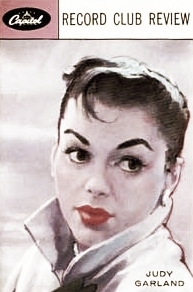
JUDY GARLAND ON BONE

A correspondent from Moscow, Anton Rodin,  kindly sent in this image of a rather beautiful bone record he has found. It contains the song SEND MY BABY BACK TO ME by Judy Garland singing with Paul Weston and his Orchestra and originally recorded in 1953 and released as a 45rpm 7 inch single by Columbia Records in the US. 

Unfortunately like many bone records the disc is too deteriorated to digitize properly but you can listen to the original song  HERE.  It is an interesting choice for an x-ray bootleg, quite happy but a bit more showtune in style than most of the copied Western songs which tended to be straight rock 'n' roll or swing.

Thanks to Anton.

DSC_0134.JPG

STILYAGI

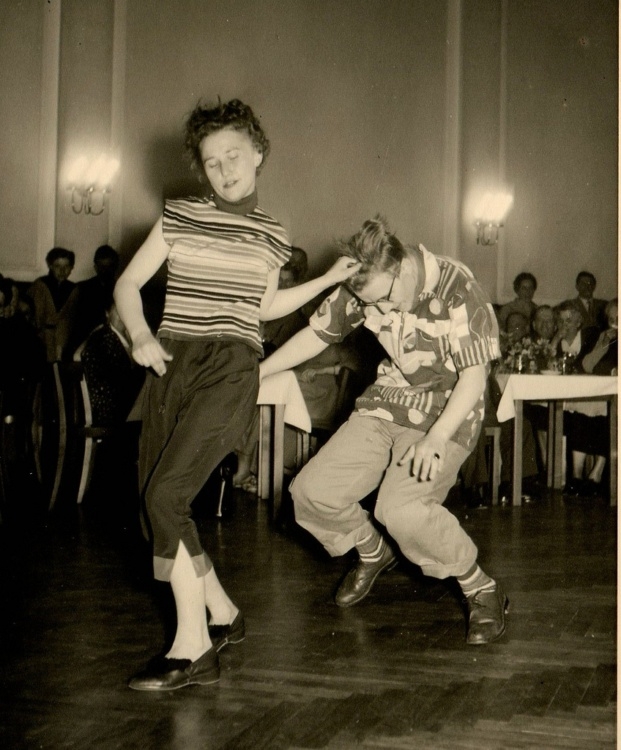
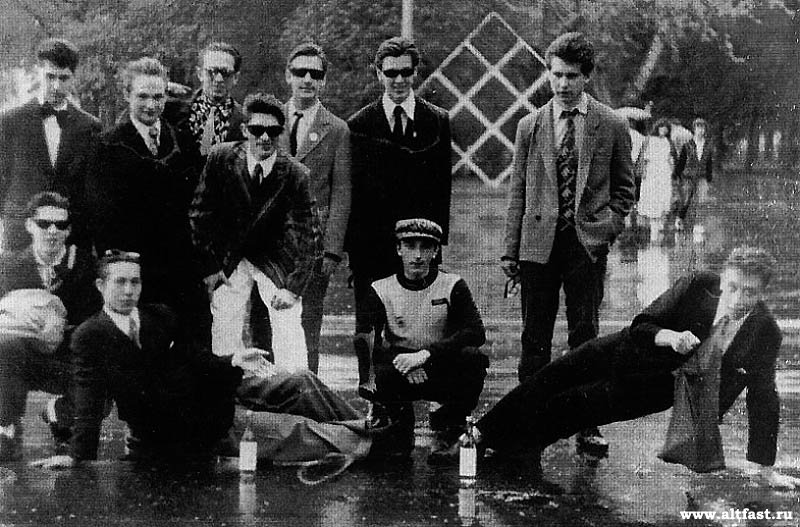
The Stilyagi, ‘style hunters’ or followers of fashion as we might say, were a small youth culture group (the only real Soviet youth culture group according to Art Troitsky), mainly Moscow and Leningrad based kids who dressed in an ersatz western style and aped American and British mannerisms.  Like any youth subculture, they tried to use clothes and music as a way to identify themselves as separate to their more conventional peers and the values of the older generation. They made up a section of the audience for x-ray bootlegs but were only interested in Western Jazz and Rock and Roll.  Their style evolved but settled around a cartoonish version of the British Teddy boy or ‘Grease’ era US 50s rock ‘n’ roll look.

The first reference to them as an actual group was a derisory piece in the satirical magazine Krokodil in 1949: "The most important part of their style is not to resemble normal people. And as you see, their efforts take them to absurd extremes. The stilyaga knows the fashions all over the world.. He's studied all the fox trots, tangos, rumbas, lindy hops in detail, but he confuses Michurin with Mendeleev, and astronomy with gastronomy... they flutter above life's surface, so to speak"

Over the next years, they were regularly lambasted in the press for being vacuous, vain, lazy, only interested in dancing or clothes and unappreciative of Soviet culture. There may have been some truth in those accusations - even some bootleggers who sold them x-ray records  seemed to have found them a bit silly -  but, as is often the way, the cartoon images that were published in the press have, to modern eyes, the opposite effect to that intended - that is, they actually make the Stilyagi look quite cool - certainly a lot cooler than the upright worthy Komsomol Soviet youths that were held up as being their moral superiors. You can't help wondering if the artists drawing the cartoons were perhaps a little bit 'Stilyagi' themselves?

In fact, the attention the press gave the Stilyagi probably rather pleased them and even the name 'Stilyagi', became a badge of honour. The had their own argot: they called Nevsky Prospekt 'Broadway'; they called each other American names like 'Bob', 'Bud' and Eddie'; they designed and made their own clothes, adapting curtains to make highly patterned ties and wide trousers; they chewed gum made of paraffin wax; they had their hair cut into elaborate ostentatious quiffed styles.

But they were rebels without a cause, more like hipsters than punks for although they are sometimes portrayed as bravely taking on the might of the Soviet establishment, they weren't really political at al. They weren't persecuted as dissidents and It wasn't an imprisonable offence being a Stilyagi, although they did sometimes suffer at the hands of the Komsomol and other disapproving citizens. There are stories of their hair being forcibly cut, skinny trousers slashed, kipper ties snipped by scissors.

But being the target of bullying and the butt of satirical cartoons didn't have that much effect - just in the way that propaganda and punishment did not stop people making x-ray records. No, what really dd for the Stilyagi was when, bowing to the inevitable, the authorities gave permission for an international youth festival to take place in the late 1950s.  Lots of foreigners including many young Americans came to Moscow. The Stilyagi were shocked and embarrassed to see that the people and fashions they had been devotedly trying  to follow had moved on. They realised they looked out of date and faintly ridiculous in comparison with the real thing.

Subsequently, there seems to have been a split with some of the old guard sticking with the more rock and roll style and younger people migrating towards a more Beat and then Hippie look in the 1960s. But it's apparent that in the more relaxed and consumer friendly atmosphere of Khruschev's 'Thaw' period, fashionable styles became more integrated in young people's clothing generally.

Krokodil carried on with its rather wonderful parodies. These images and later ones of stylish young people well into the early 1970s, take the moral line that stye concious youngsters were parasitic, living it up at the expense of their long suffering and hard-working parents - but then of course that was an accusation that was simultaneously being made of kids in the West.  

The X-Ray Audo exhibtion at Garazh the museum of contemporary Art in Moscow in August will feature a gallery of various of the satirical cartoons of Stilyagi from Krokodil.

CUTTING THE (BBC) BONE

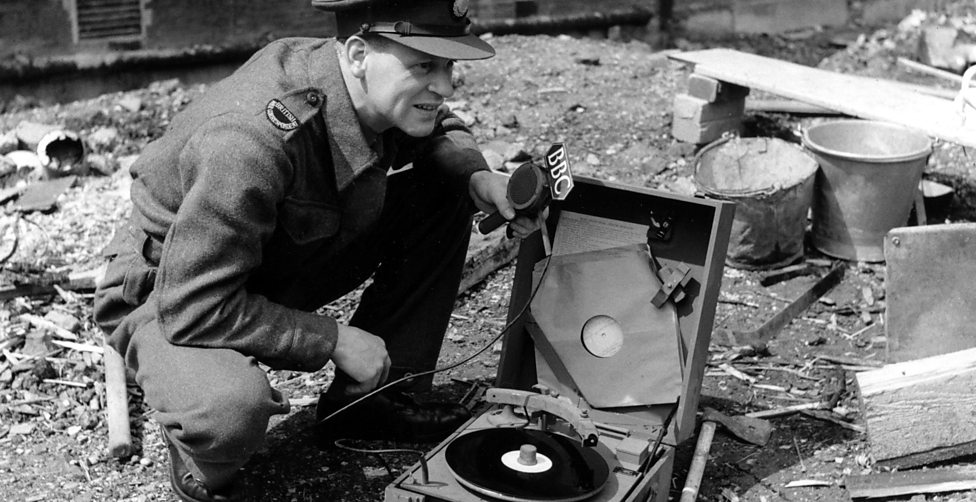
Although techniques for building a device capable of making home-made records were known about in the Soviet Union before the war, they were strictly for the highly knowledgeable amateur with considerable engineering skills. The Leningrad bootleggers really got going after a Polish refugee, Stanislav Philo, turned up in 1946 with a war trophy, a Telefunken recording lathe.  He used it to make copies of forbidden records and Ruslan Bugaslovsky of the Golden Dog Gang was able to copy the machine itself to make his own records and subsequently further machines.

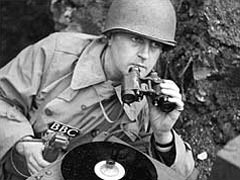
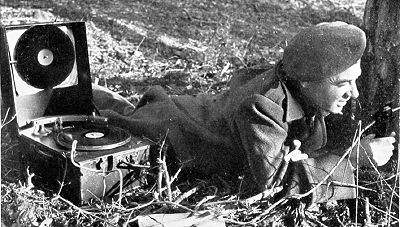
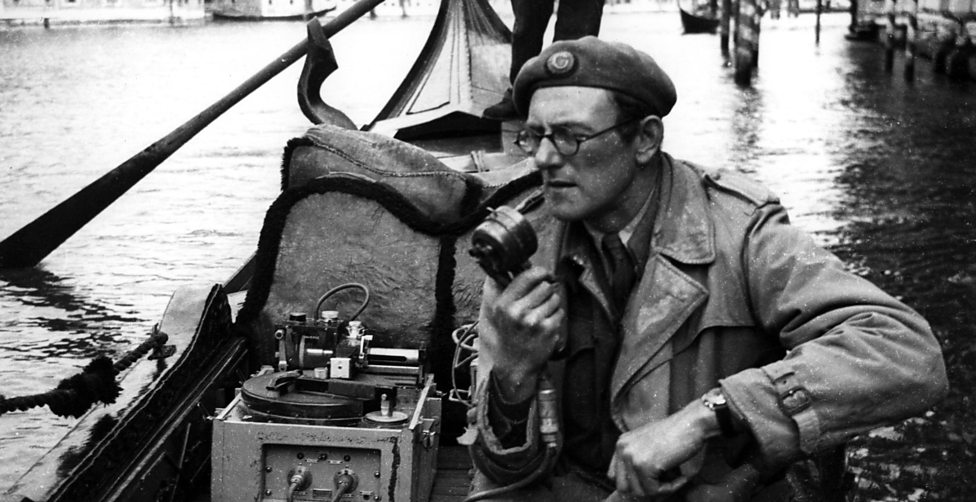
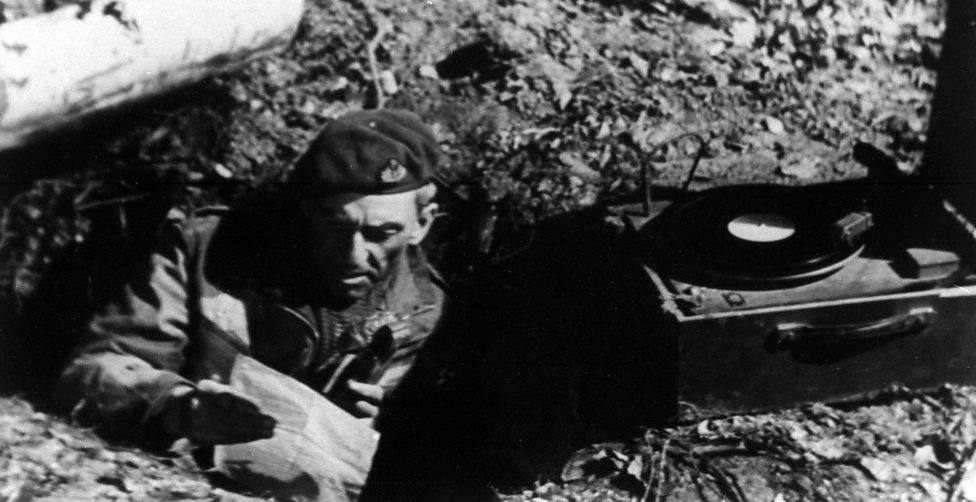
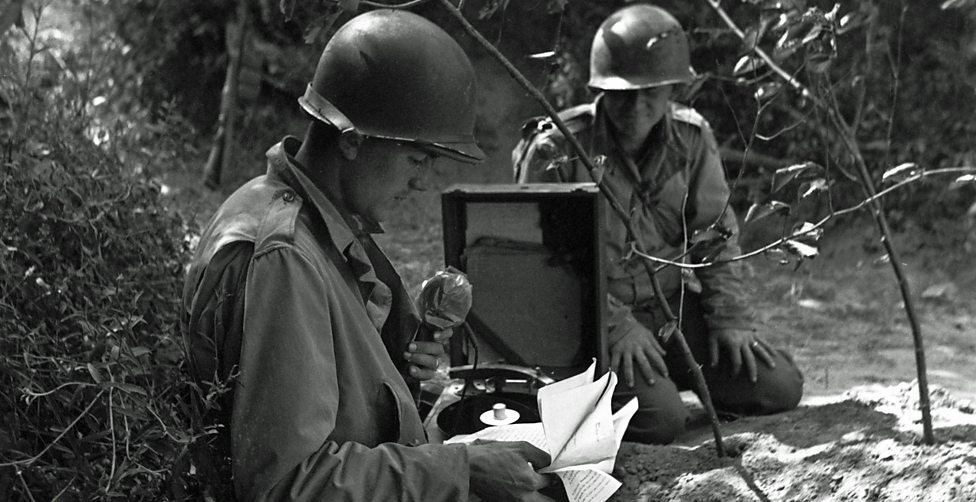
The Telefunken machine was designed to be a portable (or at least 'transportable') machine to be used by war reporters in the field.  The American and British also issued these type of machines to journalists and military personnel to make recording on proprietary discs of various sorts.  Above are some wonderful photographs courtesy of the BBC of the 'Midget' recording lathe in action.


Here at X-Ray Audio, we have been fortunate to be able to get hold of our very own 1950s lathe - an "MSS" - a later alternative to the Midget which was also used extensively by the BBC.

Currently being refurbished by the amazing Norman Field, we are hoping to take it on the road to cut x-rays and other one-off records later in the year.